Field Dispatch
A childhood that never stayed still ( part 2 )
The briefing
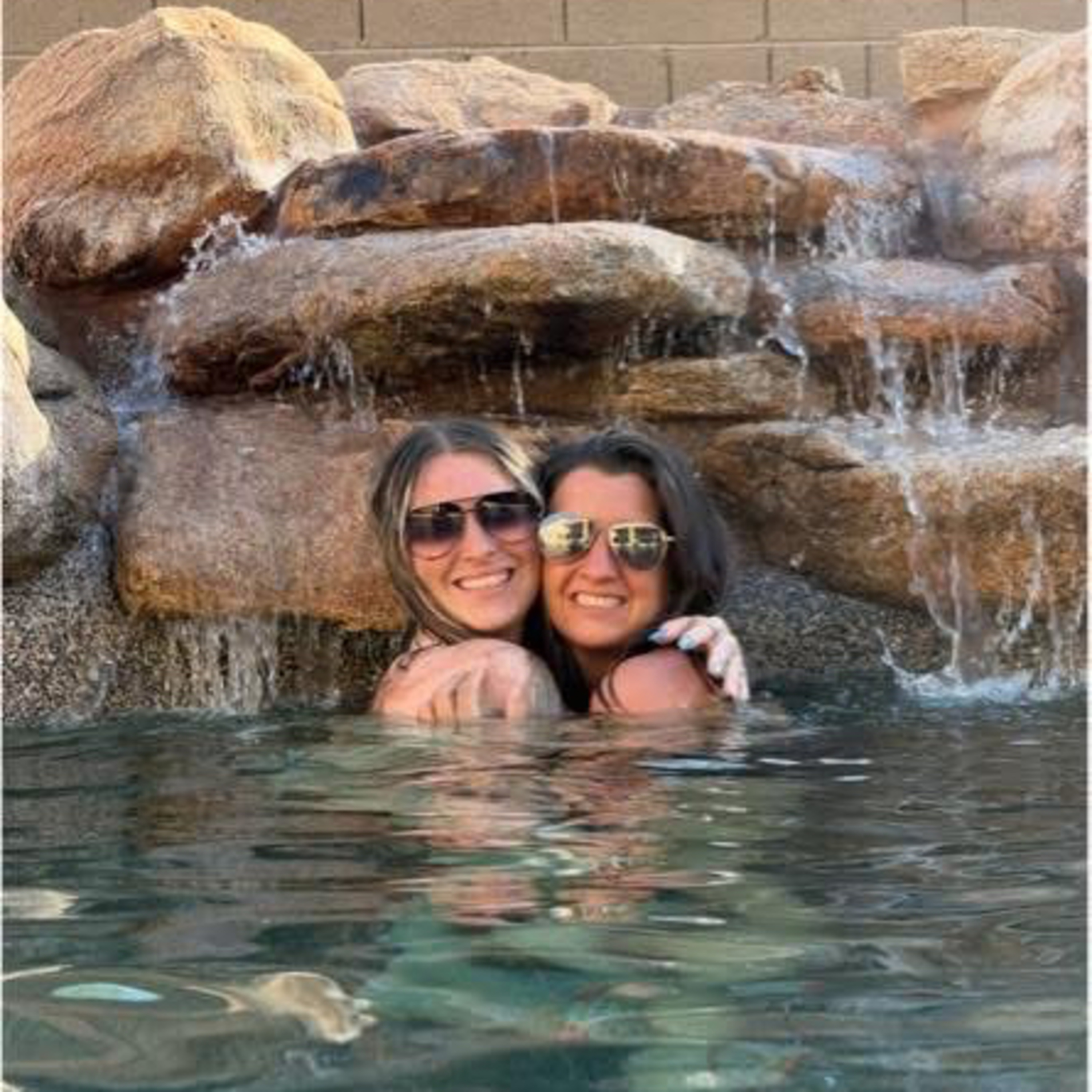
🎙️ Part 2: In this episode, my sister and I open up about what it was really like growing up constantly moving from state to state. What seemed like an exciting life of travel often felt lonely as we left behind schools, friendships, and every place we tried to call home. We share the emotions, the challenges, and the lessons that shaped who we are today. We hope you enjoy listening and would love your feedback.
Welcome back to Part 2. We're going to be doing probably part ones and part twos to these because there's a lot to talk about in one topic. So navigating that and also just going into everything that we are going to be talking about, it probably is going to take a couple episodes. And knowing how me and Kayleen are, it is you know, it, it can go for a while, but we won't we won't keep you guys like hung up on one thing for too long. But we are going to continue talking about what we talked about last time.
So we're excited to have you guys back, everyone that's back for this episode. Kaylene, aren't you excited? I am. I am so excited. So we are going to pick up on Maine. I know it kind of, you know, we kind of got sidetracked a little bit. It's kind of hard to focus on one topic when there's just so much to talk about within that topic and how we were affected and how it shaped us to who we are now. So with Maine, I think we, so we were talking about Maine. I know we were kind of going back and forth on like trying to revert to what we had been talking about.
So with Maine, that is where I was sharing oh, that I felt like I had lost hope. And then you had asked kind of diving into that. So I think I kind of want to touch up on that again, because when it came to Maine, it's I did lose hope. I feel like I went into a black hole. I feel like that that hope drug on for so long, but then also like it, my hope was so strong that it did 'cause me at a certain point to lose hope. So with Maine, it was honestly, Maine was short though Kayleen, like I don't feel like we were there that long, but I mean, like I remember when we moved into that place, like it was very empty.
Another thing that I did want to like mention moving forward is I feel like in the last episode, I really pressed on change. Now I I just kind of wanted to dive in myself really quick before I let Kayleen talk a little. Bit no, you're good. You're good. Go ahead. With change, I also like I do recovery things outside of the podcast we both do and just working on ourselves. And when I speak of change, it is such a powerful thing in anybody's life. When you make a change in any situation, any relationship, friendship, whatever you have going on in your life, making any kind of change can be, you know, a very huge shift.
So when I'm speaking in like terms of change and expressing that, I also want to be aware that when you make a change, it's like even in a relationship with God, it can look like anything school, getting a different teacher, you know, getting into a new relationship, anything you have a new lens on. It's like you're putting a pair of glasses on and you're seeing clearer, right? Because now you have another perspective and you look at things differently because everything that happens in life happens for a reason.
And once you get out of a situation, there's always going to be something that comes always, no matter what it is, there's always going to be something in life that you're learning and navigating and trusting, right? So with with the glasses scenario that I'm Speaking of, because I, this was a realization realization for me recently. It's like I'm putting I got these glasses on and I'm seeing clear, but that doesn't take away when I take off the glasses. That doesn't take away what I see before, you know what I'm saying.
Does that make sense, Kayleen? Yeah, that makes sense. Yeah. It's like you still have all of this that you're seeing and how you see it before, and you remember that when you put your glasses on, you're more thankful for the clear eyes, eyesight. So when it comes to change, I think it is important for me and my life to remember that things do look very differently total 180 from how we grew up and changes that we've made from to where I'm at now. And just because I'm where I'm at now, it doesn't mean that my eyesight from before disappeared.
So it's like I still have, you know, and going a little deeper, it's like I still have all the knowledge, all the pain, all the trauma from what has happened in life, even though I'm walking differently. It's it's still there and it's, you know what I'm saying? Yeah. So I just wanted to like express that with the whole change thing because I think it sounds so much easier said than done. When you make a change in something, it just sounds so much easier said than done. So Kaylene, I don't know, do you want to talk more about Maine or do you want to move forward?
Yeah, we can move forward from it because I feel like we kind of, I feel like we touched on a lot of because I, I'm trying to think of what else I could say about it, but I feel like I kind of, you know, said everything about Maine anyways, so. Yeah, and so I expressed how I found a letter. It put hope in me and all of that. So I don't remember where we went after Maine. I have no idea. Do you? No, I don't either. It's hard to navigate and me and Kayleen have talked about this a lot. So to whoever is listening, we're speaking to you too.
Me and my sister are speaking to each other, but we're we're also speaking to you and sharing with you. So it is hard for me and Kayleen to navigate because we moved around so much. We have tried pinpointing, you know, when we're who. And so we still kind of struggle in that area. So with Maine, I have no idea, but I think we could talk about Ohio. OK. So basically where we left off on the last podcast was we kind of finished it with talking about feeling alone and you don't regardless of what you're going through in life, you might feel alone and that like time, but you definitely have you have like God by your side, you and there I'm trying to see you Also.
You might feel alone as in like maybe not having friends or or maybe you know, whatever the circumstances are, but you also might not know, know somebody specifically. But there are definitely other people out there who's gone through the similar things or gone through similar situations as you. And talking about it, I feel like helps because whenever you're talking about things, you might be like, Oh yeah, I definitely, definitely went through that too. And then you never know, like talking about your story, my talking about your story might help somebody else open up and talking about theirs.
So I think that's where just hope through and also building hope through conversations, experiences and being vulnerable like to help create a space here for that, but. Yeah, Yeah, I agree with you making a space, an open space for listening to this podcast and also opening up when we release the e-mail and other platforms where people can start reaching out, that's also going to be open too. And it's not in a way of, hey, you don't have anyone to talk to, so reach out to us. I mean, you can literally be in a room full of 20 people, even if it's family, even if it's friends, school, and still feel like the most alone person in the room because of how heavy whatever you're dealing with, however heavy that feels like.
So we're speaking a lot on hope. Right I. Feel like I interrupted you a little bit, no? You didn't? No, I, I did. But with that being said, we can talk about Ohio too, but I didn't want to interrupt you keep you're good though. So we're. We're Speaking of a place where we're at right now when it comes to hope, looking back, meet killing. Sometimes I feel like I speak for the both of us so you can correct me, but I feel like with where we're at now looking back, we had a lot of times where now we can speak about hope because hope did carry us in certain situations, but so did hopelessness.
I think I had a lot of points in my life where hopelessness was, you know, a very heavy thing that I dealt with. And we hopelessness came from lack thereof in terms of like
environments, people, family, etcetera, etcetera, etcetera. And I'm going to say like in Ohio, I'm going to share a scenario where it affected me pretty heavily in Ohio because, OK, we were there with each other. So I remember when we were in Ohio, we were upstairs and we had been sleeping in a room and there wasn't a bed in it. There wasn't anything in that room. And because, Kaylene, we used to be outside a lot in Ohio, the time that we were there, I feel like we were at the skate park a lot, yeah.
We were definitely at the skate park. Oh, yeah. That was Ohio where we were at then. Yeah. And we I can't remember the. I know me either there there was a. Bunch of like, we made a lot of friends there too. In that room, like I remember it being so hot and you two were sleeping and I remember I was just like waving my hand over you guys. You guys were sleeping on the floor and it was just so hot and I don't know I Ohio made me depressed. I feel like that's when that's when the huge dynamic shifted and one of our parents came and got us from that and a whole scenario within.
So I, Ohio was definitely a heavy state for me personally. And I don't think that lasted too long either in Ohio because I mean, we moved around a lot, but we didn't stay in those states a lot. I mean, you can't really stay in the states a lot when you move around. I mean, you know what I mean, that many states before the age of 13, you don't really have like a time, time to adjust or anything like that. And that's why I was speaking about change, because where we're at now, I feel like it gave us the capability to adapt easier.
I feel like there's a lot of pros and cons to the life that we lived. Do you want to say anything else about Ohio? I feel like I feel like Ohio was a little bit of a blur. I do know that the one of the reasons why we were in Ohio was because I know that we as kids were trying to think about it. So this I, I'm pretty sure that we were, we were living in North Carolina and went to Ohio because somebody, somebody was going to come pick us up because there was like a 10 day period where we were needed to be back in Michigan, which.
I feel like we still don't have the answers on SO, yeah. Yeah, I agree. Another. Thing that I'm going to point out as we're sharing these situations, mind you, this is speaking from our experience and not anybody else's. That's the reason why we're not saying names. We're not exploiting who was in the scenarios. We are primarily focusing on us and how we were affected. I just want to, I, I know we've cleared it up, cleared it up a couple times. But oh, you're right, Kayleen. I feel like with our childhood, there are so many unanswered questions.
And one thing I've learned as I've gone through healing and keep working on myself is I'm learning that it's OK to not have answers sometimes. And sometimes searching for answers can do more damage than good. And sometimes it's just left leaving things where they're at. I truly, that's how I feel about it because at the end of the day, there are a lot of things we're not going to get answers for. And that's just what it is. We can ask 10 people. I mean, you can walk into a grocery store. I've experienced this first hand.
I've walked into a grocery store, asked four different employees about one item. I got an answer that they didn't have it in stock. I got an answer that it was in a certain aisle. I got an answer that they needed to check the back, and then I got another answer that they didn't carry it. So with that, you can get a lot of different. That was a question. I went into the store with a question and I got very many different answers and I left still not knowing the answer. And I think it can be applied in real life.
You're asking questions and sometimes you just don't get the answer. Again, that's from my perspective, and that's just where my mind is at with certain things because obviously there's a lot of situations in life where there's answers. I'm speaking directly to our situation, and I'm sure there's probably people out there who can relate, who have questions, why did this happen? How did this happen? Why did people let this happen? Why did the people around let this happen? And sometimes you just don't get those answers.
And at a certain point, you just have to walk out of the store, walk out of the situation, you know?
So Helene, I'm going to, if you are good with it, I was going to jump to Texas, OK. Yeah, that's that works. That's fine. Let's. Do it. Let's. Do it. Sorry I Texas. Did we talk? I can't remember what states we had and hadn't talked about yet. So I'm trying to think if we talked about Texas. Yeah. I feel like we talked about West Virginia and Maine. I feel like those are the only two we talked and then. OK. Yeah. OK. We did live in Texas, I think for a couple of months maybe. Was it a couple of months?
I can't remember, but we wasn't there long, but we definitely had experiences there as well. So we're going to share a little bit about Texas and what kind of what we learned from it and. So with Texas I, one of my favorite memories of Texas I OK, here's another thing I've learned. I spent 27 years, I'm just now getting to the point where I can look at a scenario that we went through and see the sunflower that's all the way back in the field when all the rest of it is grass. I can see the light of the sunflower and how it can light up the entire field.
Even though it's 1 sunflower in the entire field. The power of it can, you know, add a lot of depth to it. So with that being said, like the way I'm, I'm trying to explain it, there was a lot of bad growing up. I mean, there was a lot of bad and I've learned to look at a situation and scenario and when I'm looking at it, I'm trying to pick out the good. So I I just have really wanted to also try to pick out the little bit of light that was in situations. So with Texas, the person that was taking care of us always like loved basketball, I feel like, and they wanted to start a basketball league with the teenagers.
You remember Keeling? Do you remember that with like the yes. I, I, I you might. Not yeah, yeah, yeah, yeah. Do you Sorry? I know some things are hard to remember. No, don't say sorry in Texas. Right. But they wanted to start a a little, Yeah, they wanted to start like a little basketball league. So here's the thing. I love basketball. One thing when we were younger, we were like when we were with a certain person, we would get into a sport, but we never got to finish the season. Do you remember finishing anything that we did?
I remember being a basketball didn't finish that We I was an upward. I think you did upward too, yes. I did, I did. I definitely do didn't. Finish right it's like everything that happened didn't get finished right and I carried that into adulthood for a long time I, I was starting something and I never finished it. It's I think it was ingrained. I don't know, I, I think it's something I've had to work on when I start something, finish it just in general, right. Anyways, so that was like a highlight of my time there and then the friends that we had made outside, but I mean, things switched like the snap of a finger.
I. Know exactly what you're talking about. I just cannot remember what state it was in. So it was in Texas that that had happened. Because I do remember. I know what you're talking about. I just can't remember. Yeah. That was in Texas. Like sometimes talking about it and talking to you, it helps you remember certain certain things and where. To for me, yeah, like. Vice versa, but anyways, OK, So that happened in Texas, OK. Yeah, I can completely. Agree with the like starting, you know, starting something and then like you really have to push yourself to keep doing it like.
Right. And with that to going a little bit more in depth with that, This is why it takes us a little longer to explain because talking about the states, it's not simply just we moved here because of this. And then we moved here. There's so much that happened that we went through in each state that we learned or that we went through. I mean, a lot of these states, we're talking about it now. But in those moments, I, it, I was not, I, I just didn't even know what was going on. I was like, what's happening?
Why are we moving so much? We never had anything. We're bouncing, right? Right. And sometimes, like people who were supposed to be there weren't around a lot of the time or whatever you may have it. And in Texas, like I said, in the snap of a finger, everything changed. So we had met a family in North Carolina when we were younger, and people who were supposed to be around weren't around. Don't know. What was going on right? I feel like in Texas, we kind of, I don't want to say like ran in the streets, but like we, I feel like Texas, we the only thing that I can remember is us just being outside day and night and it's just me and you and like some of the kids that we were hanging out with.
And I feel like we were just constantly just like walking somewhere or going, going to one of our friends, our friends places and like I don't like ever really remember.
We had too much freedom when we were in that situation with someone there. I, you know, as a child, as a kid, you need structure. And in that time frame we did. We did whatever we wanted, whenever we wanted and whatever. I mean, yeah, I agree with you on that. I definitely agree with you on that. We definitely were doing whatever we wanted, which can sound fun from the outside looking in, but that dynamic of it, at a certain point it gets not fun, right? Right. At a certain point, you hit, why does nobody care?
That's how I used to feel like we're out here doing whatever we want. And it's like, why does nobody care? Like we're literally just out here. Nobody cares. Nobody's checking up on us. We're in these random states. Like where is everybody at? You know, where is everybody at that knows us? Or why is everybody OK with this happening, right? All the adults that were supposed to be there, like I feel like as kids we basically it was like, honestly, just me and you. I don't. I remember as kids it was like me and you, but I don't really remember ever.
I don't know. It was more of like just taking care of us and then each other really. And that wasn't like a long time frame either. And we were younger. I, we are going to get into so much on this podcast, guys like, I think there's going to be people who can listen in and relate on this. I think there's going to be people that maybe there's going to be people that don't want to listen to it, you know, and there it's if you listen to it and it hits you. There's a reason we're doing this and it's not just for us, like I've said, but as we're talking about Texas really quick, I want to give a shout out to Nae Nae and if she ever hears this.
I still have the book that we made. Kaylin, do you remember making that book we wrote like our dreams and all that? I, we did not have a lot of things as kids and with moving around so much, you know, you see, I see people now who are, are even older. They can be like 40 years old and still have something from their childhood. And I'm like, what? There are people that keep their baby clothes and stuff like that. And Kellen, obviously your mindset has transitioned and the mom that you are. But the one thing I kept throughout all the states, all the moves, all the chaos is that book with Nae Nae.
I don't know why, but I remember when we wrote it, we knew we weren't going to stay in that state and we that's who we hung out with. I just remember we knew we weren't going to stay and we made that book and I kept it all this time because, you know, people can I love. That and you talked about it, you talked about it before too, and I think it's so sweet that there's something that you were able to like take from from it and still have because you're 110% right. Like I feel like, you know, baby pictures or things that some people are able to like take with them into their adulthood.
I feel that's why I treasure everything if my kids like I literally kept everything of my kids stuff like from the time I found out I was pregnant tell now I'll always have it because I'm very very protective of not losing anything. Their baby pictures, their baby book, the outfits that they wore home from the hospital, the shoes that they wore home from the hospital. Like literally they're the umbilical cord click. Like the little bracelet that they wore on their wrist. It's making me. Tear off right now.
Like that I know, like I literally kept all of it because I don't even care if I kept it. And they're like, why would you keep that? It's it's because I just am very, very protective of her because I don't have any of that. I don't have any and I don't. No, you do, Adrian. But I. Do want to say like as you're sharing this about the kids growing up in chaos and moving, and like I said with moving, for us, our moving look different. Other people move around and it looks different. And maybe you can relate if you were a military kid or just anything like that.
Not that it's bad scenarios, but it still effects you, right? So healing with what you're sharing, it's like hitting me because very heavily because obviously how close we are and just the dynamic of everything because you're not just keeping pictures and shoes and whatever blankets, everything that you have for the kids, it's not just about that. You're giving them something that we never had and that's a home. No matter where you live, whether it's an apartment, a house, a trailer, an RV, whatever, those kids are never going to feel how we have felt our entire lives with not having a home.
Like home isn't a building. It's not a place, a building, a home, a building and a bedroom can give you comfort, but that's not your home, your family who you spend it with, that's your home. Because if your family up and moved and you have a good dynamic, you're going to probably move with them. You know, not all the time, obviously, but I. Did want to mention something else. Just with the moving and moving around a lot, we didn't just leave. We didn't just leave schools and friends and family or whatever.
We were leaving in that state. We left everything, when I tell you everything behind, literally there wasn't barely a single thing, but a little bag that we've had that we took with us. So when we say like not only just having baby thing, but baby things are literally anything. We started completely over completely new with everything. Clothes, shoes, socks, toothbrushes, like it. It literally doesn't matter. Like half the time we wouldn't even take that. Like, we'll just, you know, we, we were just, you know, just, oh, we'll buy everything new whenever we get there.
So like, I feel like, you know, yeah. It was really hard, you know, I think too, when we were moving to different States and making friends. I think as a kid for me, and I'm assuming, assuming I probably shouldn't assume, but that you probably felt the same way because as we're making friends, a lot of the schools or wherever we were, the friends that we were making, we got to see the life and that they had, you know, and it was really hard because here we are starting over again and trying to make friends with in the back of our head, knowing this isn't going to last long.
We're not going to be here long. Seeing the stability as a kid, I, I didn't look at it like, wow, they're, they have so much stability in their life. It was more of like, wow, like our we're going to move again soon where this friendship isn't going to last. I'm going to have to say bye. You know. And I do. Remember, go. Oh, sorry, no. No, go ahead, I so I do. Remember going over to a friend's house and I will never forget it because I it, it wasn't even just about being jealous over it, but they have this toy box or, and on their wall or it was either their door or their wall.
Their mom when they were a baby, took their handprints, put it in paint and their handprints were like all over the walls from their baby. And whenever I was going over there, I think it was like 1415 and I was like, wow, like that's so crazy. And so that's something that I want to just do with my kids. And I'll never forget that because I still to this day want to do that with. So yeah, I remember thinking to myself, whenever I have kids, that's something I want to do with the handprints and stuff because I was like, I want to do that for my kids because I thought that it was so cool that they had that because I'm like that we just didn't.
We just didn't have any of that. And yeah, Killeen, I think like in a moment like that, because I also, you know, felt ways like that in certain scenarios. I think looking in the lens of where I'm at now and looking back in that moment, it seems like, Oh my gosh, you know, that's so cool. We don't have that. But now looking back, that wasn't just a hamper on a wall that's making me tear up. That wasn't just a hamper on a wall. That was us walking in and seeing what it would look like if somebody cared for us the way they were cared for.
Do you know what I'm saying? Like that is somebody that loves their kids and I want to be. I also want to touch on this while I'm saying that because it's not that if anyone in our life didn't love us or situations that we were in because they didn't love us, there's a lot of times you don't know how, you just simply don't know how, even with, you know, moving a lot and having to restart. We, we learned that. I mean, we, that's how we grew up. We learned that it's not just that we're here now where we're at in our lives and now we have stability and now we've made a life for ourselves.
We had to unlearn that dynamic and sit with ourselves and killing. I've seen you do it with the kids and your family that you have now. It's like we had to sit there and unlearn so many things that we were taught because growing up in bad things or even if it's a work dynamic. Now, if anyone's listening and it's a work dynamic, there's any any scenario you can use that it's bad you have and you go into a new job, Say I'm working at McDonald's and I'm having a terrible experience. The management is terrible.
My Co workers, we're not seeing eye to eye on our work ethic. The communication's off with the customers. Whatever you may have it that could put in mind apply at McDonald's again. If I wouldn't applied at another McDonald's after experiencing that dynamic at a certain one when I walked into a new McDonald's, I would have to relearn. Now I'm in good management now there's a good crew. Now I'm talking to the customers differently because I'm in the environment's different. It's still McDonald's, but everything has shifted.
And I, that's how I'm explaining it. Because if you look at it like a job or any scenario relation, like I said, I mean, the horizon's huge on examples or real life scenarios, but we had to do that simple McDonald's scenario is what we had to do with our entire life. You know what I'm saying, right? Yeah, right. Right. Right. So I don't know why I said like that. I was like, right, Right, No. But yeah, I just. Yeah, right, right, right. With the handprints thing, though, Kayleen, I was, I guys, I am a crier and I tear up.
I could literally see a bird walking across the street and see how happy it's walking and probably tear up about how amazing it is that that bird is just happily walking across the road because it's so beautiful. Like it's a little things in life that people miss. They let it swish by them. Something as simple as a bird. It's just so incredible. I don't know how to explain it. I just, I'm in awe. But anyways, oh, go ahead you go. OK, I also feel like it's kind of nostalgic because now that we are older and closer, I feel like we're able to come together.
And, you know, you're obvious. I was going to say like you're a part of like me and Jared love you to death. Like we love you so much and we love like I don't, I don't want to say a part of our family, but but like whenever you come to visit and stuff, it's it's feels like we're missing a piece of our like little family because me and you are like our little family is just us. Like I always say the family, like I said before, the family you create is definitely more important than the family that you come from.
But with that being said, I feel like I have my little family, but when you come to visit and we're able to do Christmas together and stuff like that, it's nostalgic because I feel like we're reliving our our lives through the. Kids. The kids like we get to do Christmas and we get to do crafts and stuff like that. The stuff that we didn't get to do as kids, I feel like I'm we're able to do that with them. And so we're kind of able to relive our childhood through our our little ones. And that's why this is the way that they have the power to heal us is something only God can do.
I truly think the kids have completely changed me as a person. And see you guys, I'm like literally tearing up right now. Like with the handprint thing when I came and visited and we did handprints and I couldn't fit it in my suitcase or something. I can't even remember. And you mailed it out to me and I have it hanging up in my room and I look at it all the time. It it's something that seems so simple, but I can wake up and feel, oh, wow, I don't want to do this day. And I look at that and it's like we finally have what we always wanted.
And I mean, it's healing. And wow, look at us go yeah. Literally. I'm just kidding, you know. And I think that like even the bracelet that you had got me, it says something and it says always my sister, forever my friend. Yes, it's a bracelet, but it's also the quote that I feel like means so much to me. I'm all I've always said. And I definitely think that it does have a lot to do with the way that we grew up. And and I'm a more of a sentimental gift giver and I'd and receiver. I would rather I told, you know, my I told my husband this all the time.
I would rather you I would sorry. I would rather you like write me a note or something that's from the heart that I get to keep forever and I can go back and reread the note rather than getting like an expensive gift or I'm I'm more of like a what's the word for it that like the five, the five of languages. Yeah, it for me. It's. Definitely I can't remember, but for me what whichever 1 is like a cement sentimental gift gifts is mine. And like I, I feel like that is because of us moving around so much, just having to leave everything.
It's literally just the I, the little things that mean so much to me now. Like I, I still believe, like if somebody, I'm not even kidding you, if somebody wrote me a note and mailed it to me, I would like my, my heart would be like. So. Happy I I think it's the sweetest thing ever. I think about doing it with my friends or just family, just writing them a note and mailing it to him. Like not texting, not calling like the old fashioned like off because I don't know I just it. Just means more. And I think Kayleen, I think when we're giving given something, it hits us a little differently because we didn't get to experience that before.
And I had someone, there's someone in my life that makes me coffees and they had given me a Mason jar and it meant so much to me. I know it sounds so insane, but if you get it, you get it. The Mason jar, the dishes were full and the Mason jar was sitting on top and I accidentally knocked the Mason jar off and it broke and I literally cried because that it's just a Mason jar. But it's not because it's a Mason jar. It's because the person that gave it to me means so much to me. You know what I'm saying, right?
Yeah, that I was. Like, Oh my gosh, like this meant so much to me. And I could have ten other Mason jars, but that one was like, Oh my gosh, I I didn't have 10 other Mason. Jars, yeah, things just definitely just mean more to, you know, and it's. Not that it's even a materialistic thing. It's simply the fact that when somebody gives us something, it just holds such a powerful value because it's like the handprints on the wall that we talked about.
It's someone that cares for you. It shows and it's not it. And I'm not talking about gifts. I don't think either of us are talking about gifts. We're talking about when somebody gives something meaningful to you. I mean, it's meaningful. It's not just or even doing. It first time I like the like the right like. Getting you a pizza that. Right. I think even that's a great example. Somebody getting you a pizza. It's like we're like, Oh my gosh, you bought me a pizza? Like, I know it sounds insane, but do you know how much that means that somebody would be like, hey, I'm going to buy you a pizza?
Yeah. I know like went out of their way use their money to get right. I I feel like we're just very thankful as well. And I and A lot of people are thankful when they get something or receive something or anything like that. It just we literally go through our walk to the store to get snacks or from the gas station. I feel like you just appreciate they going through just any stuff like that in general. I feel like just makes you very, very thankful for the things that you do have and the things that you do get and you just appreciate things a lot more for sure, right.
And. I think to Kayleen like going deeper in our lives, being homeless. I heard AI heard a quote one time or I wouldn't say a quote. A guy had said it to me. I can't even remember what we were talking about. And he said the best seasoning for food is hunger. And it took me back to a couple scenarios in my teenage years. I remember one time I was so hungry, Kayleen like and whoever's listening like this is a real life scenario. I was so hungry I didn't eat for like 2 days and in this time frame it was a couple years I was struggling with money.
I was a teenager. A landlord helped me out. I was 17. He let me live in an apartment. Even though you have to be 18 it will go more in depth with all this later. My point is, I get in through my apartment door just so I could have light. And there was a time where I just, I couldn't afford food and I was trying to work. I was trying to make ends meet. I was trying to figure it out. And I remember I went to work one day and there was this girl and I went up to her and I was like, do you have any food?
When I tell you, I went over into the area where all the traffic, where there was no traffic of people and how fast I eat and how hungry I felt. I, that kind of feeling sucked. I, I mean, it sucked even being homeless and sleeping outside. Those things suck and it makes you so much more grateful when you have something and it you. And let me be clear, that is my experience. So whoever is listening, it doesn't have to be to that extreme. That was my extreme, unfortunately, but yours could look differently.
And we're sharing our experiences and the extreme and the depths of it. But I also, we're also speaking to you. So I just want to be very clear on that. Just because it looks like this for me or Kayleen, doesn't mean you wouldn't be affected by something just as heavily. Even though it looked differently, you still matter and your situation still matters. So I just wanted to say that. But yeah, with what we're sharing, I with the stuff that we, I think that I wake up every day thankful because I do feel like it gave us a gift of gratitude.
And that's not something you just go shouting around, you know, you're not like, oh, life made me have gratitude. No, that is not it. When I'm speaking on gratitude and the reason it can, even if you're listening right now and it sounds like that, it's because when me and Killeen talk, I mean, we go in and so we're also talking, me and Killeen are also talking to each other, obviously. So we feel the same way about a lot of things because, you know, we endured, even though if we weren't together or anything like that, we also endured the same things and other or anything like that, we still got hit by the storm.
So we are going to be wrapping this episode up shortly because we're going to start the next one. Kayleen, I wanted to say give a little intake on Texas and then that we're going to talk about in a later episode. So if you guys want to hear it, hopefully you come back for the next episode. When we were in Texas, we had got close with the family. I mentioned this earlier in North Carolina. The situation in Texas escalated very quickly. I mean, I don't know where. I feel like Texas was great. I feel like we were doing good.
And I mean, we were living in a one bedroom apartment with a mom and her son and that was crazy. Whatever, you know, I kind of get used to Oh, wow, this is what's happening. You feel you feel very out of place, right? You're going into somebody else's home. You already know because you have all these all this, all the states behind you, all this moving, all this. So you already kind of walk into a situation you're like, Oh my gosh, like I felt uncomfortable. I felt like we intruded. I felt like we were intruders a lot.
I felt like we did not belong. We never had a home really. So when we were moving and in Texas it really hit me. I was like we are intruding on this woman and her son. That is how I felt. I felt very uncomfortable. I felt like we just did not belong there. Bringing 3 girls, the person we were with going into this one bedroom apartment in their life, we had nothing. We had nothing. It I felt like we were intruders and that family from North Carolina drove to come get us in the situation. I'm not going to go too in depth about it because like I said, we're not exploiting anybody, but there was obviously something that happened to the point where people from a whole nother state drove to come get us.
Yeah, like so over. 20 hours to be exact, I'm pretty sure from North Carolina to Texas. I think it's it was a long drive because I remember the drive back from Texas and we were all like squished up in a small car. And that right there, and this is how we're going to end this episode. In those moments, I was so lost. I was so depressed, you know, and even though me and Kelly were in it together, I didn't even feel like we were connected. I think we were both trying to figure out what is going on in our own ways or try to process.
We didn't even know how to process. I don't even think we were able to process anything until we got older because we never had time. We never had time to just sit. There was always something happening. Always. We didn't have a bedroom we could run to. We didn't have a parent we could run to, you know, our friends were all over the United States on the Midwest. Like it just didn't have like, who do you go to? What do you do? You know, it gives you a very
unstable feeling. So to end this episode, I am going to speak. You heard all the feelings and what how those are very strong feelings. It's very easy to sit here right now and be like, oh, you know, I was sad in that moment for anybody. Whatever you're dealing with, it's very easy for people to hear. Oh, I was sad. But when you're dealing with that behind the scenes, it's heavy. It feels like a metal plate is on you in the middle of an ocean. But let's, let's switch it. And looking back at that, what a blessing it was that there were people from a whole nother state that drove to come get us out of a situation, right?
And that's hope. That right there is hope. Yeah, because like you were saying, yes, mean, I feel like was like a hope state. But as well, I do feel that there were times in other places that we had been where there was at least some something along the lines where it kept on feeling like hopeless, hopeless, hopeless, like, And it's like, OK, you know, at least at least these people cared enough during that time to literally drive their own car all the way. I need to look and see how far because I, I'm pretty sure it's like a 20 hour drive or something like that.
Definitely far. I use GPS to get to Walmart so I can help you there. So guys, we are going to conclude this episode and we hope to see you on the next one. And we're really glad for whoever's following us listening to us. Get sidetracked listening to us converse and we're just doing it naturally because we're with each other and I think just instantaneously killing when we're together or even on FaceTime. What easygoing place mentally with everything that it's just, you know, you guys. Thanks for listening to us.
I guess now you guys are kind of part of our FaceTime calls. So we will see you on the next podcast. Alrighty. See you all.
 Apple Podcasts
 Castbox
 Castro
 Goodpods
 Moon FM
 Overcast
 Pocket Casts
 Podbean
 Podcast Addict
 Podcast Republic
 Spotify