Field Dispatch
We Missed Our Childhood—Even While We Were Living It
The briefing
We’re thanking everyone who’s reached out and sharing how those messages are filling in the gaps we didn’t realize were still open. We also talk about learning you can’t save someone who isn’t ready, and we reintroduce ourselves as we step into video podcasting and a new chapter.
Hi guys, same time. Oh, my little mouse is like right on the thing, OK. Guys, restart. Restart. You go, OK, we are going to keep that. So I'm Adrian officially. You guys get to see our faces. So bye.
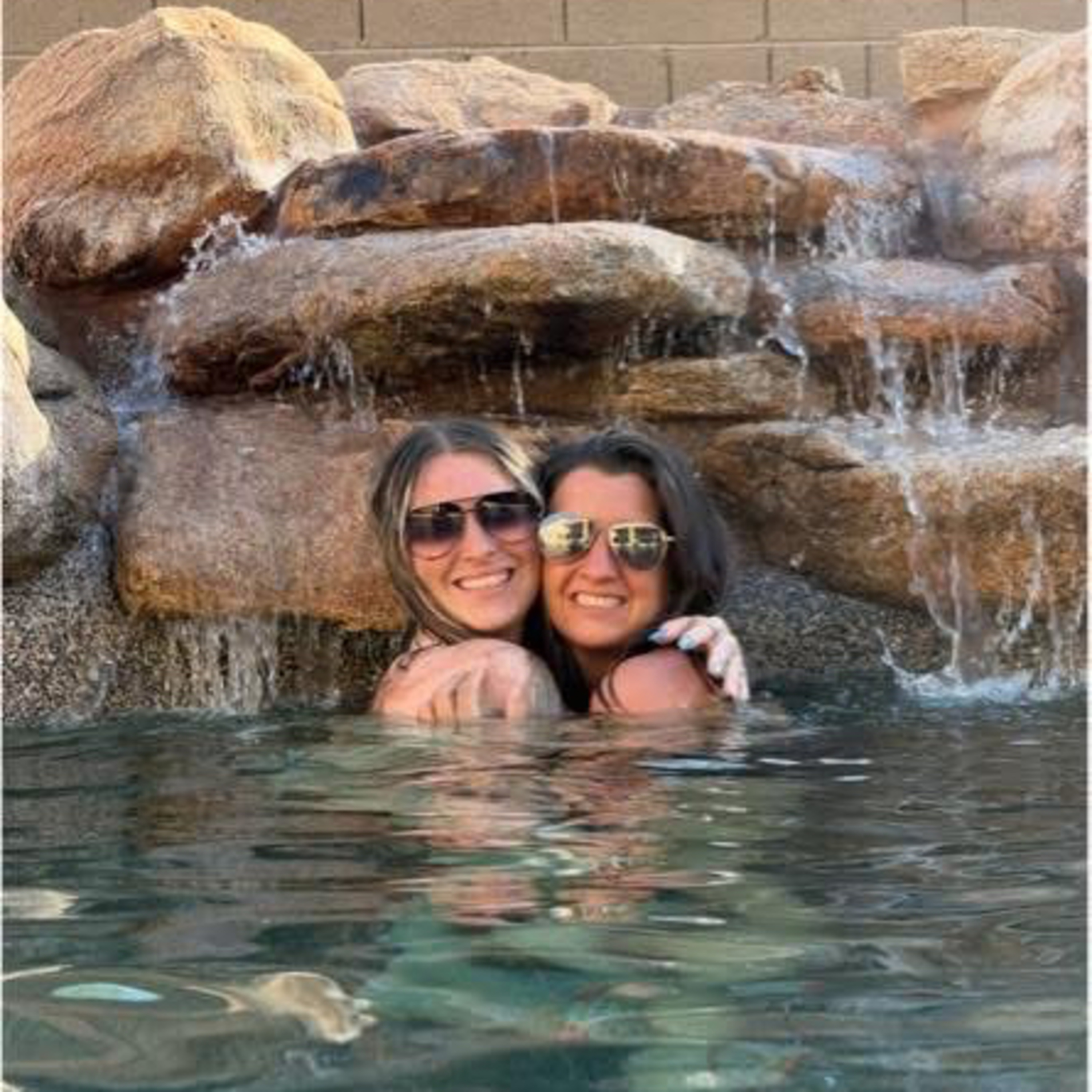
I'm Adrian and it is official. We are officially on video. I'm so excited. I am too. This is so exciting. It's so different. So I'm wearing headphones because some reason I couldn't figure out why the mic wouldn't. Like I couldn't hear Kealene when I unplug the mic. So through the computer Kealene. I have been through a whirlwind today, that's for sure. And this is our first time recording video, so we'll learn more and stuff like that eventually. So we'll get better, we promise. But I think it's going to go great and I'm excited so.
I do too. I know we've gotten kind of deep, so it's kind of probably going to be interesting to see our faces and like our reactions as we're going forward with it like. Sessions and like. Yeah. So the last one we did the room still echo, which I think is like a really good name for that. I'd really like that name. Yeah, I did. Too. Thank you Chachi PT now that we're like officially kind of getting to see each other and like you guys get to see us, we obviously have stated why we started this podcast.
So now we can do it more vulnerably with each other and with you guys and hopefully bring you guys in more with doing it this way. So, and Keeling kind of knows the whole rundown of everything because she does social media. And we also both wear, wear, wear. We both wear. We both wear overalls. So I was going to wear black, but I only have like black T-shirts that I have like writing on it. So I put it on backwards. But the tag was like tickling me and it was like choking me. So I was like. But it still looks cute.
I feel like that looks so. Cute. I know that the lighting's a little weird. I'm have to like work on that. Yeah, we're gonna. This is like our first. Time doing. This so it'll get better you. Know like I look like half my eyebrows are missing. You know what? But I don't like it. Honestly, before we had started, we were kind of going back and forth on what we wanted to speak about. But before this podcast started, my sister and I, we had a very, very deep conversation about just things that happened that sometimes she remembers, I don't, I remember she don't.
So, you know, I, I think that we could kind of lean towards more of like a things that were left unsaid kind of vibe. Yeah, I think that was definitely a today kind of vibe for sure. So with her saying that, I actually want to say thank you to whoever's watching this and whoever's reached out to the podcast directly, because it's not only for one, to the people reaching out to us when you were in our lives, you're telling your story. And anyone that does in the future, don't ever apologize because you did nothing wrong and you're not doing anything wrong by sharing your story.
And another thing, this was said to me recently, how can you heal from something you don't remember? So the people that reach out and share stuff with us, it's actually, yes, triggering. And you know, we navigate it in our ways, but at the same time, we're able to heal parts of us that either she didn't remember or I didn't remember, or we came together on and we can kind of now we weren't there for each other because they're like we've shared in the previous episodes on Spotify and Apple and it's now on YouTube.
We can now come together and be there for each other through it as adults. So it's this is a huge thank you to everyone that is has will reach out because it genuinely is helping us as well. And we want to be there for whoever we didn't have the capability to be there for when we were kids. So or we were trying to be there in the best way we could, I would say. Yeah. And I, I do want to say as well, like if you do have any stories or you're thinking about reaching out to us, you just don't really know if you want to or leaning back forth, go ahead and do it.
Because I think it also is beneficial to whether it was us, people that were involved in our lives and we, we were kids, whatever that looked like for you, we're here to be those ears that you never had during that time. And so we, we just want to be there as well as sharing our stories, as you know. Yeah, and you guys have heard a little bit about our stories. There's so much to dive into, like when I think about what to talk about on episodes, my mind goes in a million directions because there's just so much that happened and so many different avenues we could take on this podcast for sure.
Yeah. Today, I know we kind of were talking about how we were affected with things in the previous episode. That one kind of got long winded for sure. We're also learning time management on our episodes and now we're actually doing it completely on our own, editing, recording everything. We got all of our setup so we're able to have a little bit more leeway and and we're so grateful for the studio that helped us and they're the reason why we are able to do what we're doing, you know, so we thank you to them as well.
They were kind of just going to chat and you guys are going to be here for it. So I said on the recordings for Spotify when we were posting on there that you guys could hear us. Now you can see us. And I always said too, it's like you're part of our FaceTime calls now. You are literally, which I think is cool, like because Kayleen, honestly, we, we just did this for over an hour. We're like, wow, we should have been. Reported. Yeah, but sometimes we have to navigate things with each other as well because of what this podcast entails and figuring out like the insurance and outs of that.
Basically like I, I didn't want to say so if this is your first time watching since it is video, basically this podcast is just about being here, being a safe place to talk about certain things that may have happened. My sister and I had, I don't want to say been through everything, but we've been through a lot, especially during our childhood. We went through a lot like I, I don't know how to explain that. Just think of a worst case scenario in certain things and that's probably what had happened you.
Know and I know I said in an episode I talked about answers and not having answers. Another thing piggybacking off what I just said earlier, you guys reaching out and sharing is actually filling in gaps for us that we have not gotten answered. And like I said, it goes for either or because then me and Kelly can share together and bounce off of each other what she remembers off a certain things. So I we're not going to out anybody. We're not going to share the messages on here. We're not going going to do any of that because that's personal.
Now, if somebody was to say like you can talk about that on the podcast, we would with their consent, obviously, and also if they wanted to come on here. So that is also open as well. I just wanted to say that because this podcast, it's not just me and killing, we're the ones sharing, but it has to do with everyone that was involved too, because there was a lot of states, a lot of people, a lot of, you know, chaos in between and all, you know, you see a piece of paper and there's a lot of lines and we had like a line here and a line here and in between it was like a lot got missed and not answered and not accounted for.
So this podcast is actually the most healing thing I think. Yeah, I was actually just about to say that like starting this podcast, I feel like a lot of me internally, emotionally, everything is is getting healed in a way because I'm like getting answers. And also there's some people that was in our life that I wonder like, are they OK? Yeah, because like, you know, we, we just got put in bad situations and watched other people get put in bad situations. And so like as children, we, we may have felt guilty for that.
So it's good to hear like you're doing well, although there was a bump in the road, you know you're doing well and it's great to hear that. Let's also go take a second and give a huge shout out and then thank you to the people that did step up with what you were battling. That is another thing I want to say, the gratitude that's carried in my heart and I know I'm Kaylene's heart. Thank you. Yeah, for sure. Genuinely. Wholeheartedly thank you for every single person that tried their best to step in.
Yeah. It's not unnoticed at all what we're going to say. Especially just having kids, it's hard to like see a situation and step into that, especially when they have like parents involved. Stuff like that, you know it's. It can get very messy and complicated for sure. Yeah. And it's not like with anything, it's not easy to like put yourself in a position you've never been before, like reaching out to a podcast and. Saying like. Hey, this you know this happened. A lot of courage. Yeah, it is. It is.
And it kind of goes to say with what Kelly is saying, sorry, I don't know what to do. Here we go. It kind of goes, oh go. I said we appreciate it, but. That's we both it kind of goes like using example real life that I've heard from people say you have a 5 year old in your classroom and you're a teacher and the five year old look at that guy guys. That's always the thing. You have a 5 year old and the five year old is acting out or you cannot control them. They're constantly throwing something, talking back, whatever.
You have a limitation because you're their teacher, you're not their guardian. So it's kind of goes hand in hand with that. When there's kids, something happening with kids, you kind of get your hands tied at a certain point because you're not the guardian and sometimes you call the police it. There's a lot that goes into it guys, like when it comes to the police and trying to do legal things, there's so much that goes into it and the legal system takes forever also. Yeah. And with the legal system, we were just talking about some stuff that from our childhood, and it is giving answers.
I think I'm gonna have to process some things for sure. But at the same time, I'm so grateful for the answers because there's been this unanswered thing. And like I said, you don't always get answers, but the things that we are getting answers for, it is kind of almost not validating because that's not the right word. Closure, I would say I think it's going to be a very good time of like grieving and closure when killing and I get the opportunity to talk about certain things. We're both going to need our time.
So with this podcast, there's going to be times we need to take a break as well because we have our boundaries as well and we have our processing, all of that. We don't want to stop. We're this far into it and we're so grateful. Killing. You're thinking something. I don't want to know what it is like. What's going through your mind? No, I was just listening, but at the same time, you know, I was just thinking like how much the podcast has like brought us together. Like I thought it we were close, but I feel like it's brought us closer together, like on a deeper level.
We are finding, I mean we are learning stuff about each other that was unanswered in our relationship because like we've said, we didn't gain our relationship until what five years ago and we like gaining it. We didn't get this close overnight obviously and it's been a journey and it's been hard and we've gotten triggered and we've had to take our own space. I am more of a FaceTime, FaceTime, FaceTime, FaceTime, but their everyone needs their time and processing. So that's a huge part of this. Yeah, for sure.
I know we're kind of like redo, we're kind of like redoing an introduction right now, but it's just we're introducing ourselves finally in person. Yeah, So it's kind of cool. Yeah, now y'all can see our faces and like our friends and how like really what we're thinking. Yeah, it's all of that being said, we had shared some stuff for sure in previous episodes and I almost wish that we would have been video because I feel like it would have been more personable. But we starting a new podcast and trying to figure it out.
We anytime you start something, you have to figure it out. So we had to figure it out and here we are. So yeah, yeah. So we don't even have it all figured out. I mean, I'm in headphones right now and the headphone is like literally pushing my ear and I'm thinking about taking it out. This is like pushing my hook into my like side right there I. Feel like if y'all have seen our previous episodes previous like things that we have spoke about, we've shared a lot about our experiences as like children, stuff that happened when we were living in the stricter household versus the freedom household, stuff like that and how we were separated.
There were a lot of times like I said and I say this a lot, we were all together and then got separated and then together again and then separated. And so like, it was really difficult with having siblings being separated like that and then back together because with me and Adrian, it took us a while to like, fully understand each other and also like, we're sisters, but it's like we didn't know. Anything. We are sisters.
We we didn't know like anything about each other. I thought her. Because she was my sister. And then I started learning some of the stuff that she had went through and I was like, wait a second, what? And and then I was like, holy crap. Like I, I got to learn her all over again as an adult. And it's kind of, I mean, you know, it, it, it sucks when you're a child and you go through all the, all of those things. But at the same time, like I got to learn my sister on like a deeper level that I don't think I would have gotten that chance if we had a normal life, if that makes sense.
Yeah, Killeen, I totally agree with you. I think that shoe leaving twice, I didn't handle it well and not in a way where I was like acting out of bounds or anything like that. Emotionally, I, I didn't realize how much it affected me until I got older. I really didn't. I really, really didn't realize how much it affected me. And I think when it really hit me was when I had went to North Carolina for about a week and came back to Indiana for a situation and I just, nobody cared. I mean, I had been homeless and when I stay homeless, I bounced around friends houses and I slept at that like chair.
I explained things like that there was a night that I I was not going to go back to a certain household because of what was happening in that household. And it's one of those things when you walk in the door, you don't know what you're going to get for one. And for two, you leave feeling so more confused and heavy. And that night I literally had like a backpack on and I was going around knocking on my friends doors and that small little town asking if I could stay there because I had nowhere to stay.
And I had met one of my good friends, her friend, I'd been there before. And I knocked on her door and I was like can I please sleep in your, what do you say? Basement on the floor? Like I will do anything. And she opened her door and let me sleep there. So there was like situations like that. I think I was so focused on surviving. So I'm so grateful for that person. There's so many stories that I could share where people helped and opened up their homes when I was younger to help me. And it speaks a lot of volume.
And I explained it like this recently because I really had to sit and think about it. I was like, I had people that stepped in to help when I was younger, but I didn't know how to accept it. So I, I'm a big analogy person. So I was thinking of it in a way like this. If I had a glass of water, OK, And I need this water to survive. Like I want this water when I'm dehydrated. I don't want to chug a Mountain Dew when I'm completely dehydrated, covered in sweat. I work in construction. The a pop is the last thing I want.
I want water and I would chug a bottle of water. So that is something that I'm always going to want. I'm always going to want it. I'm always going to need it. Now if I got a caramel macchiato sat in front of me, it's going to look good and it's going to look appetizing. But I know that I want that water. That is how I feel about parents. You're always going to want, you're always going to want parents water. You're it's a necessity when you're a child because they are raising you and you are learning from them.
And in times in my life, I did not know how to accept the gratitude for having a caramel macchiato coffee next to me because I was so focused on what I didn't have because my glass of water was empty. So I I still appreciated the caramel macchiato, but even when I got hydrated, which with this analogy, it didn't really happen. But I've learned that I actually am so appreciative that that caramel macchiato was sitting next to me because whenever I was ready for it, it was going to be there. But as a kid, I just didn't know how to be grateful that it was sitting there because I was so focused on the water.
Does that make sense? Yeah, that does that makes sense. That's the way that I can explain it. I love caramel macchiatos, so iced. So it's a really good way to explain it because when you want something, you don't always get what you want. Now, in literal terms, yes, you're always going to want any water. But this is obviously an analogy, so it's like I'm explaining it. But that caramel macchiato, I'm finally in a place in my life where I can sit and enjoy a caramel macchiato and not be thinking about water because I'm not dehydrated.
Because the people that are in my life now are so hydrating and such a different. It's almost foreign when you start getting around. Healthy people and you see a different way of life from what we saw you. I really feel like your life starts worsening in a different way. It kind of goes to say when you see a kid that's loved, you can tell when a child is loved. Like if you go walk into a school, you can tell. You can just tell by the way a child holds themselves versus a child that's really not doing OK.
There was a time in school when I was just going through the lost and found, you know, and there's nothing wrong, like, I get it. This has nothing to do with money. I would never, ever say that. I'm just speaking in terms of lacking basic human things. But sometimes, I mean, it's definitely not to do with money, but sometimes we lacked the, I'm not saying we didn't have what we didn't need, but we got a lot of hand me downs, like it was like stuff like that. So we're always grateful for what we get.
So it's definitely not like materialistic or like like money since it's it's more like love and support. Right, You could have the same shoes for 10 years, but getting an ounce of love will carry you way farther than a brand new pair of shoes. Right. I would rather sit in an old pair of shoes that barely had soles and have people in my life that loved and that I love then get a brand new pair of shoes. It has nothing to do with clothes or anything like that. So. Yeah. I think our childhood was very confusing.
I think, like I've said, people love to their capability, what they're able to and what they know. And I know that. But at the end of the day, the more that I'm going through therapy and doing groups that I do, I'm learning there is just a human line that is drawn with what you do with people, let alone kids. I mean, there, there's got to be a point where you're like, this probably isn't OK. This shouldn't really be doing. You know, me and Kelly kind of talked about a lot before this, so I have a lot on my mind.
But also I yeah, it's hard to say without saying so. That's the same kind of boat I'm in. I'm like, gosh, I don't I my mind is gone like a million different places, 'cause I'm like. But generally, what are you thinking going off of anything that we spoke about today? I'm just thinking, I think a few episodes ago I was talking about how I felt the need to save or protect the person I'm staying with.
I feel like as a child, and maybe not every child, maybe you didn't feel this way because some people have resentment, some people hold guilt, some people hold like the need to want, like to save or whatever. For me that that was me. I felt like I wanted to save the person that I was staying with. But with that being said, not everybody feels this way, but me as a child, I just wanted that like love that parental parental kind of love so bad that I would have done anything. And it can almost like.
Anything. Confusing because when you have a parent that's there not in a way that a parent should be, but someone that is present with whatever was happening, it can almost feel like loved to you because it's so blinding because that's all you know, you've never known anything else. So in in a child's mind, that is love and it gets confusing. So then when you get older, you have to start purging. You have to start purging to figure out that was not normal and that was not love. And there's a lot of things, I think, in our lives where you look back and it's like, yeah, that needs purged because that was not love.
But in our minds at the time, that was love. So then it comes this whole thing where you start attracting what you think is normal and it's not normal. So now your friend group looks exactly like what you came from because that's your normal. And it's not that you're not normal. That was just your normal. And there's nothing wrong with that. But there does come a point in time you do become an adult and you got to start, you got to take accountability and you have to do the work and really sit and reflect and do the work.
And it's not easy. I'm not. I will never sit here and say yeah, go here, have fun. No, because it is detrimental. It is sad, it is hard, it is heartbreaking, it is lonely, It is the hardest thing. But I can tell you when you start getting on the other side of it, it it's life giving. It's eye opening. It brings a whole different sense of the world to you because now you're on a different side of it and you're seeing a whole different side. And like I explained with the glasses way earlier in the podcast, you still have the blind eyesight from how you saw the world before, but you also had the glasses on.
So the times. And that can also be explained as a trigger. You get triggered and you take the glasses off and you're seeing that way and now you're walking weird because you're not seeing clearly. It's the same thing. You're triggered. So you took your glasses off because your trigger brings you back to that moment and you're living in it. And I, I recently did that. I lived in it for four months. Like I got so triggered and I just lived in something for four months and I didn't realize. It goes back to, I don't know how far my entire life I spent a while trying to navigate that.
And it's really important who you have around you definitely as an adult, because as a child you don't really have a choice. You hang out with who you hang out with. At the same time, whoever has guardianship, I guess you can say whoever's taking care of you, they're kind of choosing for you to an extent. Because at the same time, we also shared the freedom. So it it gets a little confusing with our story, but my whole point I think you get the point. I do think too some. Sometimes you'll hear a parent say, Oh well, they're young, they're not going to remember.
Oh well, they're young, it's OK. Kids listen. You would be shocked at how much I remember from such a young age. Truly and honestly it would blow your mind. Like they they're going to remember. Yeah, and you. And when you think they're not listening, they're listening. Yeah, for sure. And, and every kids different and, and maybe your memory is different, but for, for some people, especially when you've been through that much so young, your memory starts to really develop at a very young age. And I, I feel like just, I mean, even 3-4, you don't, I mean, it all starts depending on what has happened and the moments leading up to when they're 7-8, they could say something like, Oh, I remember this.
And you're like, what? Like they might truly and honestly remember. I was going to say like sometimes memories fade but. Or get blocked out. Or get blocked out, but sometimes there's things that will trigger trigger them. You cannot remember something and they get a trigger and it can help bring it back for sure. Yeah, for. Sure. Agree with that. You think it's all fine and dandy and then you're like walking one day and you're like, oh, shoot. Yeah, yeah. Oh, shoot. Oh, shoot. Yeah. Then you're, you got to like work through that.
But what were you going to? Were you going to say anything about the saving? I kind of sidetracked that a little bit. Just basically kind of what I had mentioned before in previous episodes, you you can't. It's kind of like if someone's driving a car on a snowy road and there's swerving all over. The snow is completely all over the windshield. They have the windshield wipers on, but you're in the passenger seat and the car's still swerving. There's nothing you can do for that person because they're the one in the driver's seat.
Right. As much as you want to help, when you're in it with them, there's nothing you can do because their foot is controlling the pedal and they're holding the steering wheel. And sometimes if you're the one that tries to help and you try to move the steering wheel, you can jerk it the wrong way and the car can crash. You. Just can't help people sometimes unless they want to be helped and they want to slow down the car and push the brakes. Yeah, of yes, Yeah, that's actually honestly took the words right out of my mouth like do.
What I can? But yeah, like you can't say, for one, you cannot save somebody that doesn't want to be safe. For two, you cannot save anybody. Everybody's their own person and everybody does their own thing, their own decisions, their own choices. You could sit there and talk to somebody for two weeks and like, I love you, you're important to me. Motivate them. Send motivational things to them every single day. Positivity. Positivity, but then they, they, they just don't feel like connected and and they just quit their job.
They, they locked themselves in their room because sometimes people need to deal with certain things on their own and sometimes like people are going through things that I don't know, you don't know, Everybody goes through their own things. And it that's why I say kindness is free. And you don't know, walking into the gas station, just because they're working at the gas station, you're thinking like the, oh, they're they have to be here. This is their job. But for them it's, it's their life, right?
I. Was just going to say that. You treat them like crap or you're like throw your money at them because you're having a bad day. You don't know what they're going through. Like what if they just lost somebody? What if they you don't know what the other person that you're interacting with is going through, whether it's the grocery store, gas station, restaurant, like you just don't know waitressing. You have no idea what they're going through. Like you have to be kind to everybody truly and honestly.
And I'm not saying like if somebody come, if somebody comes up to you and they're treating you complete crap, I'm not saying like, oh, like just be nice. All like throughout the whole thing, like be like, you know, stand up for yourself. But at some and also no 99% of the time when someone is acting that way it has nothing to do with you. Unless you know you did something, it has nothing to do with you. I used to be like that. I would be rude at times and it would have nothing to do with the person because I was going through my own thing.
It had nothing to do with them. But communication is everything. And Keeling called me right now and was like, hey, Adrian, what should I get for dinner? And I'm like, I don't know, why are you calling me and figure it out instead of what sounds good. Yeah, you you can be irritated, but I'm not. It has nothing to do with her. Maybe I had a long day at work and I just don't want to talk. It's as simple as that. But on her end, it could all night. She could be like, well, what did I do wrong? Why was she rude to me when in reality it had nothing to do with her, I was just tired from work.
Yeah, exactly. And and for me to relate that to not my life today specifically, but to relate it to my life, then that brings me back to like this saving part of things is it doesn't matter what I did because it wasn't going to affect their choices and their own decisions. For instance, like, you know, walk, walk in it. And then you are nice or you are nice or you are mean. They're mean to you, you're mean to them back, you're nice to them back. Kindness goes a long way. But with the saving part of things, no matter what you try to do, unless somebody wants that, then there's nothing that you can really do.
Like whenever I said, if somebody locks themself in their room, you're banging on their door, they don't want to, they don't want to talk. They're like, please just leave me alone. I mean, space, the only thing you can do is give them space. There's sometimes you can't do anything. Sometimes it's not you, and sometimes it's just something somebody needs in that moment. And I had to learn growing up, like I'm not at fault for somebody else's choices. I think I put a lot of blame on myself for decisions that somebody else had made.
And I had to take a step back and, and say like, it's not your fault. It it's you had nothing to do with the, the thing that the person was doing to others or stuff like that. Like, like if you have a friend and they're really, really mean to a classmate, you're going to I for me anyways, I'll speak for me. I would feel guilty because I'm like, that's my friend and they're treating somebody bad. I'm like, what can I do? Hey, stop doing that. They don't stop. And then I start blaming myself even more because I'm like, I didn't do enough.
Or sometimes you just can't.
What I'm trying to say is you have you, your actions, your decisions, although you're kind to people, that's all you can do. You cannot control what another person does. And also in the same breath, it's not your fault for what that other person has done. If it, if it's mean or hateful to somebody else, you know it. It's not your fault. Yeah, But this is our first video one. Obviously we are going to wrap this one up because we're going to record another one with you guys and we are trying to manage the time a little bit better.
So we're going to dive in deeper on the next one. We kind of like redid an introduction, so welcome. But we hope you guys join us on the next one. And we're always, as I say, we're excited to be here and for you guys to be here. So if you guys want to hear more, we would love for you to join us and we will see you in the next one and killing I'll see you in just a second. See you in just a second.
 Apple Podcasts
 Castbox
 Castro
 Goodpods
 Moon FM
 Overcast
 Pocket Casts
 Podbean
 Podcast Addict
 Podcast Republic
 Spotify